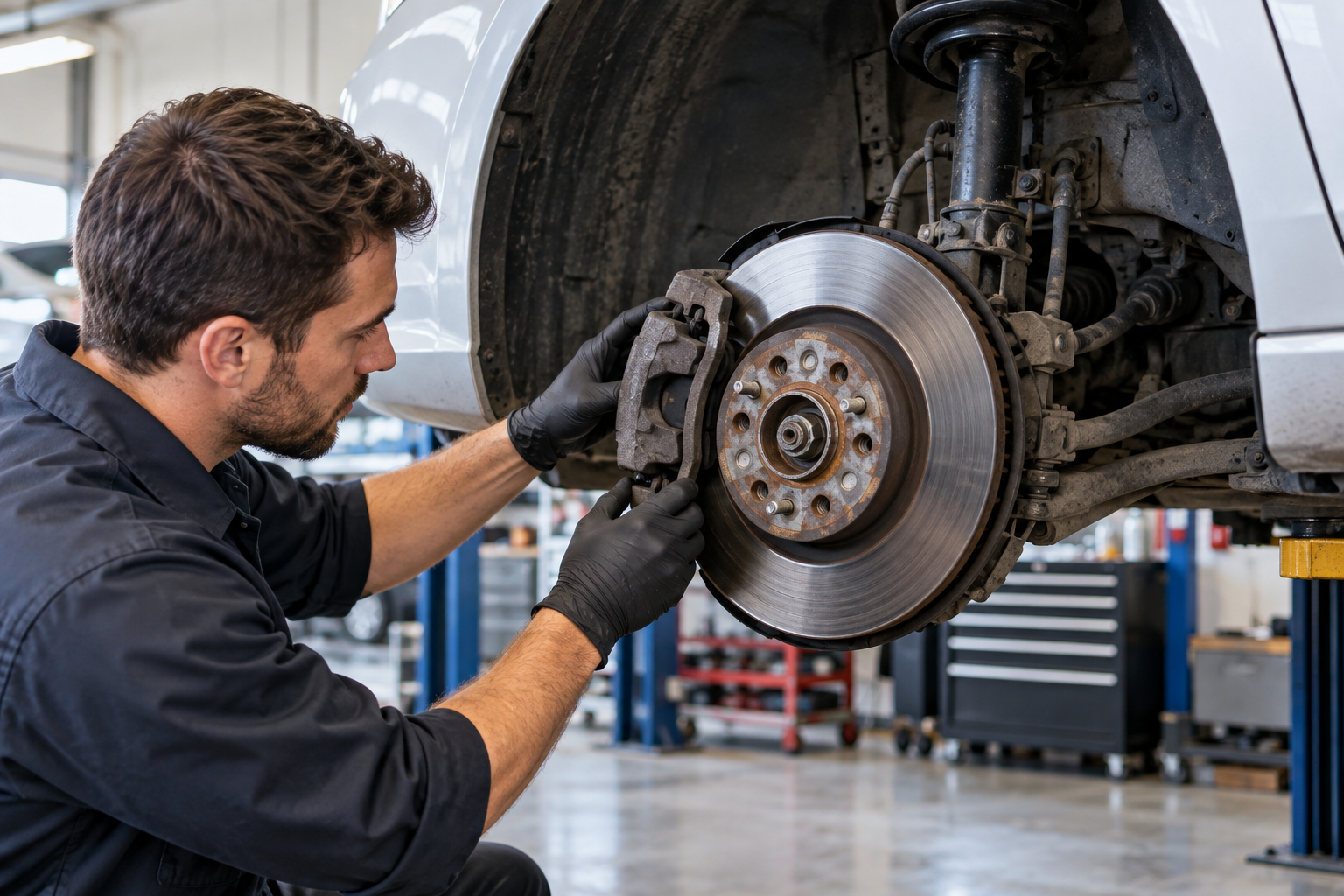
Grinding, squealing, vibration or a soft brake pedal can point to very different brake-system problems. Deals On Wheels & Tires provides in-shop brake inspection and repair in West Palm Beach for passenger cars, SUVs and light-duty pickup trucks.
What a grinding brake noise can mean
A grinding sound during braking can occur when friction material is worn down enough for metal components to contact the rotor. It can also come from debris, hardware or another brake-related problem. Continuing to drive with a serious grinding noise can increase damage and reduce safe braking performance. If braking feels unsafe, do not continue driving the vehicle.
Why brakes squeal
Squealing does not automatically mean the same repair is needed on every vehicle. Pad wear indicators, glazing, rotor condition, brake dust, hardware and other factors can create noise. An inspection is the right way to determine whether the vehicle needs pads, rotors, hardware or another repair. Noise that appears mainly while backing up can load pads and hardware differently from forward travel; use our reverse-only brake squeak guide to report when it happens. Treat scraping, grinding, a soft pedal, pulling, unusual heat or reduced stopping as higher-priority symptoms.
If one wheel becomes noticeably hotter than the others after driving, use our hot-wheel brake-or-bearing guide to report the wheel position, odor, pulling, smoke, warning lights and whether the heat appeared after normal driving or repeated braking. Do not touch the wheel, rotor or caliper to compare temperatures, and do not continue driving if there is smoke, severe pulling, reduced braking or a wheel that may be binding.
Steering-wheel or pedal vibration while braking
Vibration that appears mainly during braking may be related to rotor condition, wheel-end components, suspension or other issues. Because vibration can have more than one cause, diagnosis should come before replacing parts. If the vehicle also pulls or has uneven tire wear, a wheel-alignment and suspension inspection may also be appropriate.
What a soft brake pedal can indicate
A soft or unusually low brake pedal can indicate a hydraulic problem, air in the system, fluid loss or another brake-system fault. Changes in pedal feel deserve prompt attention, especially when accompanied by brake warning lights, visible leaks or reduced stopping performance.
If brake-pedal feel has also changed, our brake-fluid and pedal-feel guide explains why fluid condition can be useful evidence but does not by itself identify a leak, hydraulic fault or worn friction component.
A pedal that feels unusually hard—especially after the vehicle sits—follows a different diagnostic path from a soft or sinking pedal. Our hard brake pedal after sitting guide explains the vacuum-assist, hose, check-valve, booster, pump, obstruction and mechanical checks to report before an in-shop diagnosis. Do not keep driving if braking effort or stopping ability is unsafe.
What we inspect at the West Palm Beach shop
- Brake-pad condition and remaining friction material
- Rotor condition and wear
- Brake-fluid condition and visible leaks
- Calipers and related hardware where applicable
- Warning lights and symptoms reported by the driver
- Related tire, wheel, steering or suspension concerns when relevant
Learn more about our brake repair in West Palm Beach, general auto repair and new tire service.
Brake inspection in West Palm Beach
Deals On Wheels & Tires
3292 Shawnee Ave #9, West Palm Beach, FL 33409
Monday–Friday 8:30 AM–5:30 PM
Saturday 8:30 AM–2:00 PM
Sunday closed
Call 561-847-4097 to discuss your brake symptoms and current shop availability. Passenger-vehicle brake service is performed at our West Palm Beach shop.