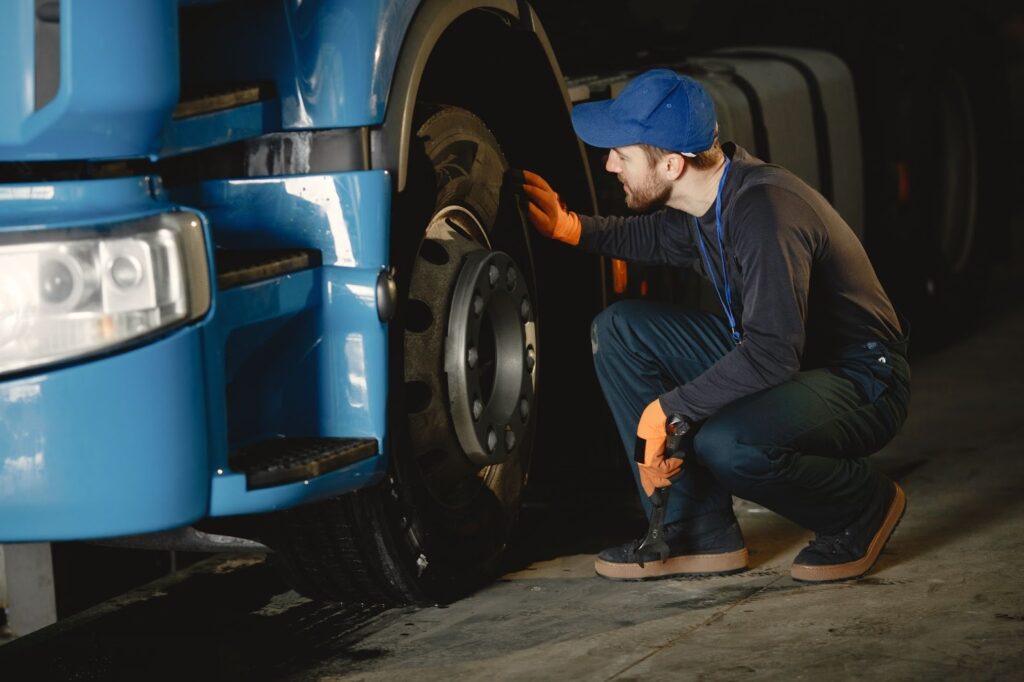
For fleet managers, owner-operators, and heavy-duty mechanics, the health of a vehicle’s suspension system is the backbone of operational success. Among the various maintenance tasks required to keep a Class 8 truck or vocational vehicle on the road, heavy-duty axle alignment service stands out as one of the most critical, yet frequently overlooked, investments.
When a massive vehicle carries 80,000 pounds of freight across thousands of miles, even a fraction of a degree in misalignment can lead to catastrophic financial losses and safety risks. This guide explores the technical depth, economic benefits, and procedural necessities of professional axle alignment for the heavy-duty sector.
Why Heavy-Duty Alignment is Different
Unlike passenger vehicles, where alignment primarily focuses on the front two wheels, heavy-duty trucks require a comprehensive approach. A tractor-trailer combination often has three or more axles that must work in perfect synchronization.
The Complexity of Multi-Axle Systems
In a heavy-duty setup, you aren’t just dealing with steering; you are dealing with tracking. If the drive axles are not square to the frame, they will push the vehicle in a direction other than where the steering axle is pointed. This creates a “dog-tracking” effect, where the trailer swings out to one side, increasing the vehicle’s footprint and the risk of side-swipe accidents.
Impact on Modern ADAS
Modern trucks are equipped with Advanced Driver Assistance Systems (ADAS) like lane-departure warnings and automatic emergency braking. These systems rely on sensors that assume the mechanical chassis is straight. If your axles are misaligned, the electronic “eyes” of the truck may misinterpret the vehicle’s path, leading to ghost braking or system failures.
The Economic Impact: Saving Pennies, Losing Thousands
Many operators view alignment as a reactive service: something you do only when the truck starts pulling to the left. However, the true value of heavy-duty axle alignment service lies in preventative ROI.
1. Radical Fuel Savings
Fuel is the largest variable expense for any fleet. When axles are misaligned, the tires are essentially “scrubbing” against the road surface rather than rolling freely. This creates immense rolling resistance. Studies by organizations like TMC (Technology & Maintenance Council) suggest that a properly aligned vehicle can see a fuel economy improvement of 2 percent to 3 percent. While that sounds small, for a truck traveling 100,000 miles a year, that translates to thousands of dollars in saved diesel.
2. Maximizing Tire Life
Tires are the second highest expense for fleets. Misalignment causes specific wear patterns:
- Feathering: Often caused by incorrect toe settings.
- Cupping: Usually linked to suspension issues or severe out-of-balance conditions exacerbated by alignment.
- One-Sided Wear: A classic sign of incorrect camber or a bent axle.
Professional alignment can extend the life of a tire casing by 20 percent or more, ensuring you get the full value out of your rubber before needing a retread.
3. Reducing Component Fatigue
When axles are crooked, the entire drivetrain works harder. U-joints, carrier bearings, and even the transmission feel the vibrations and lateral stresses caused by “fighting” the road. Regular alignment services reduce the vibration that rattles cabs and shakes sensitive electronics, lowering your overall “cost per mile.”
Technical Indicators: When to Seek Service
Recognizing the signs of misalignment early can save a fleet from an expensive roadside breakdown. Keep an eye out for these red flags:
| Symptom | Potential Root Cause |
| Steering Wheel Off-Center | Front-end toe or rear axle thrust angle issues |
| Vibration in the Floorboard | Drive axle misalignment or driveline angles |
| Vehicle “Darting” | Excessive caster or worn kingpins |
| Uneven Tire Wear | Incorrect camber or toe-in/toe-out |
| Driver Fatigue | Constant steering correction required to stay straight |
The Components of a Professional Alignment
A “quick check” is not an alignment. A high-quality heavy-duty axle alignment service involves a deep dive into the geometry of the chassis.
Total Vehicle Alignment
A professional service focuses on the Thrust Line. This means aligning the rear axles perfectly square to the frame’s centerline and then aligning the front steering axle to the rear. If you only align the front end, you are ignoring the “engine” that pushes the truck.
The Three Pillars of Geometry
- Toe: This is the most critical setting for tire wear. It refers to whether the fronts of the tires are closer together (toe-in) or further apart (toe-out) than the backs of the tires.
- Camber: This is the inward or outward tilt of the top of the wheel. While heavy-duty axles are often fixed, excessive camber usually indicates a bent axle or worn-out spindle.
- Caster: This is the forward or backward tilt of the steering axis. Proper caster ensures the steering wheel returns to the center after a turn and provides straight-line stability at highway speeds.
The Equipment: Laser vs. Computerized Systems
The days of using strings and tape measures are largely over for professional shops. Modern heavy-duty alignment requires specialized technology to handle the scale of these vehicles.
- Computerized Imaging: Using high-definition cameras and targets attached to the wheels, these systems create a 3D model of the truck’s geometry.
- Laser Alignment: Highly accurate for long-distance measurements, ensuring that the trailer tracking is perfectly aligned with the tractor.
- Induction Heating: Often used during the service to loosen seized adjustment bolts without damaging the integrity of the metal with a traditional torch.
The Service Process: What to Expect
When you bring a heavy-duty vehicle in for service, the process should follow a standardized workflow to ensure nothing is missed.
Step 1: Pre-Alignment Inspection
A technician should never start an alignment on a broken truck. They must check for:
- Worn kingpins and bushings.
- Loose wheel bearings.
- Sagging leaf springs or leaking air bags.
- Proper tire inflation (alignment cannot be accurate if tire pressures are uneven).
Step 2: Measurement
The vehicle is driven onto a level rack or a flat floor bay. Sensors are calibrated, and the “as-is” measurements are recorded. This provides a “before” snapshot for the owner.
Step 3: Rear Axle Adjustment
The technician starts at the back. By adjusting the torque arms or using shims, they ensure the drive axles are perpendicular to the frame. This sets the Thrust Angle to zero.
Step 4: Front End Adjustment
With the rear axles squared, the technician moves to the front. They adjust the toe, and if the vehicle allows, the caster and camber.
Step 5: Road Test and Documentation
A final printout is generated showing the “Before” and “After” specs. A road test confirms that the steering wheel is centered and the vehicle handles predictably under load.
Common Misconceptions About Axle Alignment
“I only need an alignment when I buy new tires.”
Waiting for new tires is a mistake. By the time you get new rubber, the misalignment has already cost you hundreds of dollars in extra fuel. Alignment should be a scheduled maintenance item, typically every 80,000 to 100,000 miles, or twice a year.
“Trailer alignment doesn’t matter.”
A trailer that doesn’t track straight acts like a giant wind sail, creating massive drag. If the trailer axles are skewed, the tractor has to work significantly harder to pull it, destroying your fuel economy regardless of how well the tractor is aligned.
“Alignment is just for the front wheels.”
As mentioned, the “push” comes from the rear. If your drive axles are crooked, you are essentially driving sideways down the road. This is why “Total Vehicle Alignment” is the industry standard for heavy-duty applications.
Environmental and Safety Benefits
Beyond the balance sheet, proper alignment is a matter of corporate responsibility.
- Reduced Emissions: By burning less fuel through reduced rolling resistance, fleets significantly lower their carbon footprint.
- Safety on the Road: A truck that handles well is a safer truck. In emergency swerve maneuvers, a misaligned suspension can lead to unpredictable weight transfer, potentially causing a rollover or jackknife.
- Driver Retention: In an industry struggling with a driver shortage, equipment comfort matters. A truck that vibrates and requires constant “fighting” to stay in the lane leads to driver fatigue and job dissatisfaction.
Choosing the Right Service Provider
Not all shops are equipped for heavy-duty axle alignment. When selecting a partner, look for:
- Specialized Bays: Ensure they have the space and level floors required for Class 8 vehicles.
- Certified Technicians: Ask if their staff is trained specifically in heavy-duty suspension geometry.
- Detailed Reporting: You should always receive a computerized printout of the alignment values.
- Comprehensive Service: A shop that can also perform suspension repairs (bushings, tie rods, etc.) is preferable, as these often go hand-in-hand with alignment.
Conclusion: Investing in the Long Haul
Heavy-duty axle alignment service is the definition of “preventative maintenance.” It is a technical procedure that pays for itself through improved fuel mileage, extended tire life, and reduced mechanical wear. In the high-stakes world of logistics and transport, staying “in-line” is the fastest way to stay profitable.
Whether you are managing a fleet of hundreds or operating a single rig, prioritizing the geometry of your axles ensures that your vehicle remains a reliable tool rather than a mounting liability.