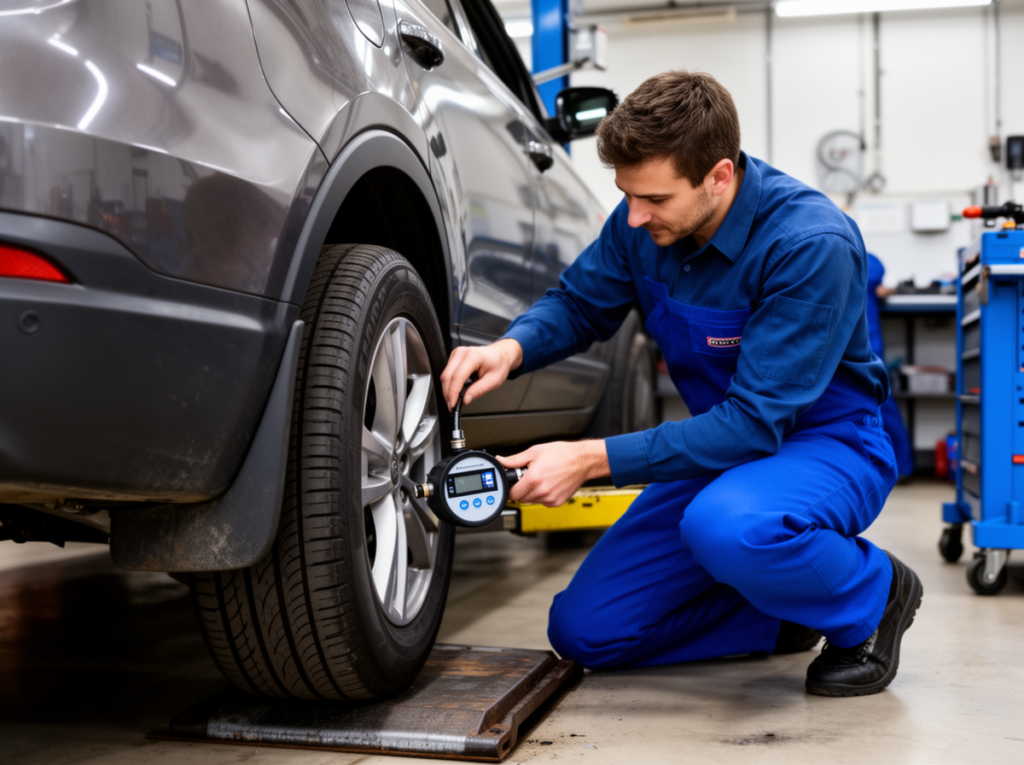
A tire that starts losing air after a pothole hit needs more than a quick pressure adjustment. The impact may disturb the bead seal, bend a wheel, damage the sidewall or expose a puncture that was already developing. The safest next step depends on how quickly pressure drops and whether the tire or wheel shows visible damage.
What to record before the tire is inspected
Note which tire triggered the warning, the cold pressure shown on a reliable gauge, how long it takes the warning to return, and whether the car now pulls, vibrates or makes a new noise. A one-time pressure change is different from a tire that repeatedly loses several pounds while parked.
If the loss happens overnight, compare the pattern with our overnight tire-pressure guide. Do not use the maximum pressure molded on the tire sidewall as the normal setting; start with the vehicle placard when the tires are cold.
Bead, wheel, valve or tire damage?
A pothole can momentarily flex the tire against the wheel. Air may escape where the bead seats, especially if corrosion, debris or prior wheel damage is present. The wheel itself may be bent or cracked, and a valve stem or TPMS service component can also leak after a sharp impact. A tread puncture may be repairable only after the tire is removed and the inside casing is inspected; shoulder and sidewall damage is not handled like a repairable tread puncture. Our tread-versus-sidewall puncture guide explains that distinction.
If the tire continues to lose air but impact damage is not obvious, use our tire-air-loss-with-no-visible-nail guide to compare valve, bead, wheel-corrosion and small-puncture clues. A post-impact leak still needs an inside-and-out inspection because a bent wheel, disturbed bead or internal casing damage can be missed from the outside. Do not rely on sealant or repeated inflation to identify the leak, and do not drive on a tire that is visibly low, bulged, cut, separated or causing new vibration.
When not to keep driving
Stop in a safe place if the tire is visibly low, the sidewall is bulged, cut or separated, the wheel is cracked, or the car begins shaking or pulling sharply. Do not rely on a TPMS light turning off after adding air, and do not keep reinflating a damaged tire to postpone inspection. Driving on a substantially underinflated tire can damage the internal casing even when the outside still looks usable.
What a proper shop diagnosis checks
A useful diagnosis checks the tread, valve, bead area and wheel for the actual leak, then inspects the tire interior when removal is needed. If the impact also changed steering feel, the suspension, wheel balance and alignment should be evaluated rather than assuming air loss is the only problem. See our pothole and alignment checklist for the symptoms that point beyond the tire.
West Palm Beach tire and repair service
Deals On Wheels & Tires provides in-shop passenger tire leak diagnosis and repair, new passenger tires, Hunter wheel alignment, brakes, A/C, diagnostics, batteries, steering and suspension, oil service and preventive maintenance at 3292 Shawnee Ave #9, West Palm Beach, FL 33409. Passenger tire replacement is new-tire service only; we do not sell used or recap passenger tires.
For an inspection or service request, call Deals On Wheels & Tires at (561) 847-4097 and describe the impact, tire position and pressure-loss pattern.