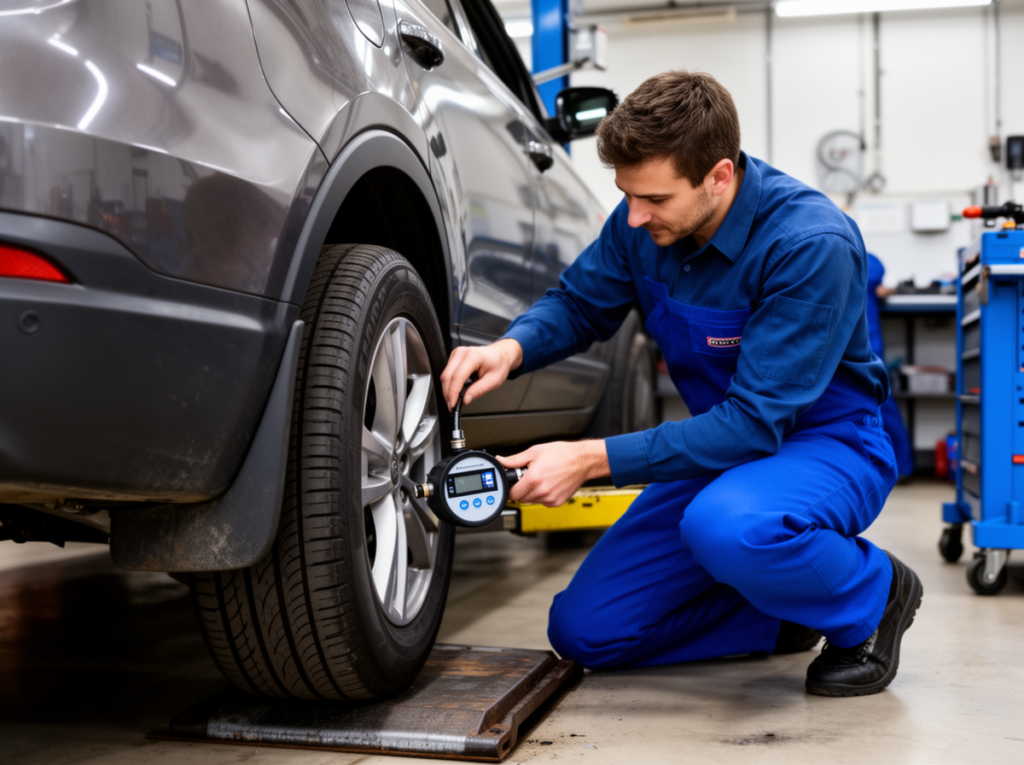
Tire pressure often reads higher after a vehicle has been driven, especially on a hot South Florida day. That change can be normal because the air inside the tire warms and expands. It can also expose a tire that was set incorrectly when cold, a pressure difference between tires, a TPMS concern, or damage that needs inspection. The useful comparison is a cold reading against the vehicle manufacturer’s placard—not an immediate hot reading against the cold specification.
Why pressure rises during a drive
Flexing of the tire, road temperature, outside heat, vehicle load, speed and braking all add heat. As tire temperature rises, pressure rises with it. The amount is not identical on every trip or every tire, so one universal “normal increase” cannot diagnose the vehicle. The pattern matters: all four tires rising similarly is different from one tire showing a much larger change or a warning that appears only after driving.
Use the door-jamb placard and check cold
The recommended cold inflation pressure is normally listed on the driver-door jamb or another vehicle placard. It is selected for the vehicle, load rating and original tire application. The maximum pressure molded into the tire sidewall is not the routine target for every vehicle. Check pressure before driving or after the vehicle has been parked long enough for the tires to return near ambient temperature, then compare all four tires with the placard.
Do not bleed air from a hot tire simply to force the reading down to the cold placard value. When the tire cools, it may become underinflated. If the hot reading concerns you, record it, allow the tires to cool, and recheck with a reliable gauge before adjusting pressure.
Clues that deserve more than a routine adjustment
- One tire rises or falls differently from the other tires on the same axle.
- The TPMS warning appears after driving, after a temperature change, or after recent tire service.
- A tire repeatedly needs air when checked cold.
- The tread or sidewall shows a bulge, cut, exposed cord, separation, cracking or unusual heat.
- The vehicle feels unstable, pulls, vibrates, or the steering response changes.
- Pressure was set using the sidewall maximum instead of the vehicle placard.
If a sidewall shows a bulge or bubble, do not treat it as a pressure-adjustment problem. Use our tire sidewall bulge guide to understand why visible casing distortion is not a safe puncture repair, and avoid adding or bleeding air while standing beside the damaged area. Keep the vehicle parked until the tire and wheel position can be inspected.
If a tire loses pressure after the vehicle sits, use our guide to overnight tire-pressure loss to separate puncture, valve, bead and wheel clues. If the warning began after tire installation or rotation, review the TPMS light after new tires checklist.
Pressure does not explain every ride complaint
Overinflation or underinflation can change ride feel and tread contact, but vibration, pulling or noise may also involve balance, wheel condition, alignment, tire construction, suspension or installation. A pressure correction should not be used to hide a damaged tire or mechanical problem. If the symptom started with a recent tire installation, our tire installation checks explain what else should be reviewed.
When to stop driving
Stop when it is safe if a tire is rapidly losing pressure, the vehicle becomes difficult to control, a sidewall bulge or exposed cord is visible, the tread is separating, smoke or a burning odor appears, or the tire is contacting the vehicle. Do not touch a tire or wheel that appears unusually hot and do not crawl under an unsupported vehicle. A damaged tire can fail without additional warning.
Tire-pressure and TPMS service in West Palm Beach
Deals On Wheels & Tires provides tire-pressure checks, TPMS diagnosis, tire repair, new passenger tires, mounting and balancing, Hunter alignment, brakes, A/C service, diagnostics, batteries, steering and suspension repair, oil service and preventive maintenance at 3292 Shawnee Ave #9, West Palm Beach, FL 33409. Our passenger-tire inventory is new tires only; we do not sell used or recap passenger tires.
Call 561-847-4097 with the vehicle year, make and model, the cold readings, the after-driving readings, the placard specification and any TPMS warning or tire damage you observed.