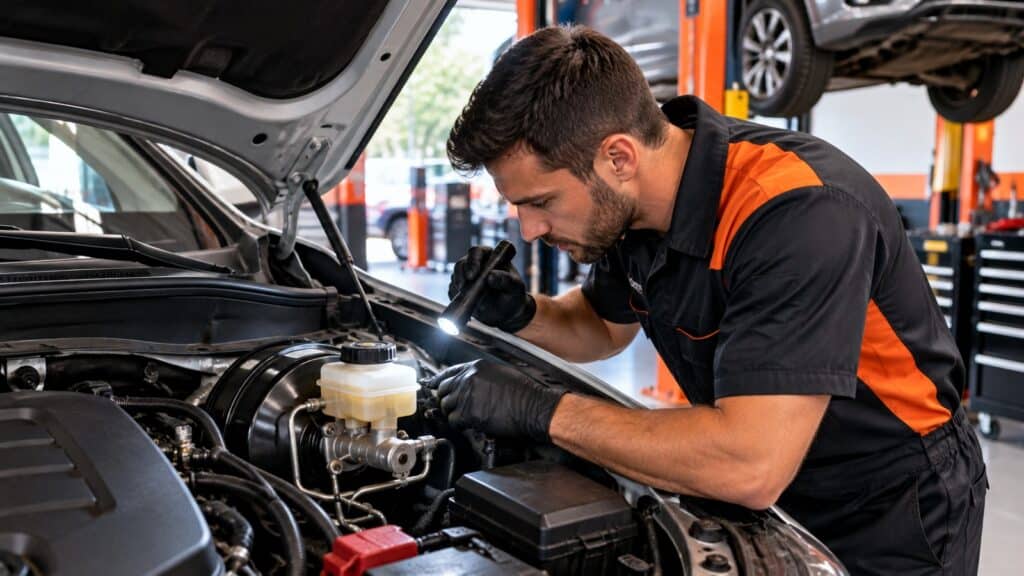
A brake pedal that feels soft, travels farther than usual, or gradually sinks while you hold pressure is different from ordinary brake-pad noise. It can indicate a hydraulic braking problem that deserves prompt inspection. If your vehicle is not stopping normally, do not drive it to the shop.
What does a soft or sinking brake pedal feel like?
Drivers describe a pedal as spongy, mushy, low, slow to return, or sinking toward the floor. One important distinction is whether the pedal feels soft as soon as it is pressed or initially feels firm and then continues moving under steady pressure. Both deserve professional diagnosis; they do not necessarily have the same cause.
Tell your technician when the symptom began, whether it happens every time, whether a warning light appeared, and whether any brake work was recently completed. These details help narrow the inspection.
Possible causes of a soft brake pedal
Brake-fluid leaks
Brake lines, flexible hoses, calipers and wheel cylinders can leak on applicable vehicles. Fluid near a wheel or on the ground may be a clue, but not every leak is visible externally. Low fluid may also accompany worn pads, so simply topping off the reservoir does not identify the cause.
Air in the hydraulic system
Hydraulic brakes rely on fluid to transmit pressure. Trapped air can make the pedal feel compressible. Bleeding may be necessary after certain repairs, but repeatedly bleeding the brakes without checking for leaks and component faults is not a complete diagnosis.
Master-cylinder or ABS hydraulic faults
Internal master-cylinder seal problems can allow hydraulic pressure to bypass rather than consistently operate the brakes. Some modern vehicles require model-specific ABS hydraulic testing. A technician should test the system before concluding that a master cylinder or ABS component needs replacement.
Brake-fluid contamination or overheating
Brake fluid requires maintenance. Moisture, unsuitable fluid, overheating or age may contribute to problems. However, a fluid exchange alone cannot repair a leaking line, caliper or cylinder. Always follow the vehicle manufacturer’s approved brake-fluid specification.
When should you stop driving?
Do not continue driving if the pedal approaches the floor, braking pressure suddenly drops, you see active fluid leakage, a red brake warning appears alongside changed braking behavior, or the vehicle cannot stop predictably. Arrange appropriate vehicle transport rather than testing the brakes in traffic. Pumping the pedal a few times does not establish that the vehicle is safe.
What a West Palm Beach brake inspection should include
At Deals On Wheels & Tires, an in-shop inspection can check relevant lines, hoses, calipers, pads, rotors, fluid level and condition, along with the driver’s reported symptoms. The next tests depend on the vehicle and what the initial inspection reveals.
A repair recommendation should distinguish worn friction parts from hydraulic leaks, master-cylinder issues, air in the system and any required fluid or bleeding procedures. Replacing brake pads is not the solution to every soft-pedal complaint. Learn more about our West Palm Beach brake repair services.
What to tell the shop when you call
- Whether the pedal feels spongy immediately or sinks while held
- Whether the warning light is on and whether braking has changed
- Any visible fluid leak, recent repairs or unusual noises
- Vehicle year, make, model and whether the vehicle can be moved safely
Frequently asked questions
Can new brake pads fix a soft pedal?
Not if the underlying cause is hydraulic. Pad wear, rotor condition, leaks, fluid and pressure-related components require different checks.
Can I just add brake fluid?
Low fluid needs an explanation. Adding the correct fluid does not repair a leak and may mask a serious problem.
Is this mobile passenger-car brake service?
No. Passenger-car, SUV and light-duty pickup brake service is performed at the Deals On Wheels & Tires shop in West Palm Beach.
Schedule an in-shop brake inspection
Deals On Wheels & Tires is located at 3292 Shawnee Avenue, Suite 9, West Palm Beach, FL 33409. Call 561-847-4097 to discuss symptoms and shop availability. Hours are Monday–Friday 8:30 a.m.–5:30 p.m., Saturday 8:30 a.m.–2 p.m.; closed Sunday. Review our full-service auto repair offerings. Passenger vehicles are offered new tires only.
For a separate explanation of moisture, contamination, pedal feel and when fluid service may be appropriate, see our brake-fluid and pedal-feel inspection guide. A fluid exchange is not a substitute for diagnosing leaks or hydraulic component faults.
Arrange an in-shop brake hydraulic inspection
If the brake pedal is soft, sinks, changes suddenly or is accompanied by a fluid leak or reduced braking, minimize driving and address the safety concern before routine use. Call (561) 847-4097 with the vehicle year, make and model, pedal behavior, any brake warning light, visible fluid leak, and whether the symptom includes grinding, squealing or vibration so Deals On Wheels can confirm in-shop brake inspection availability and related auto-repair diagnosis.