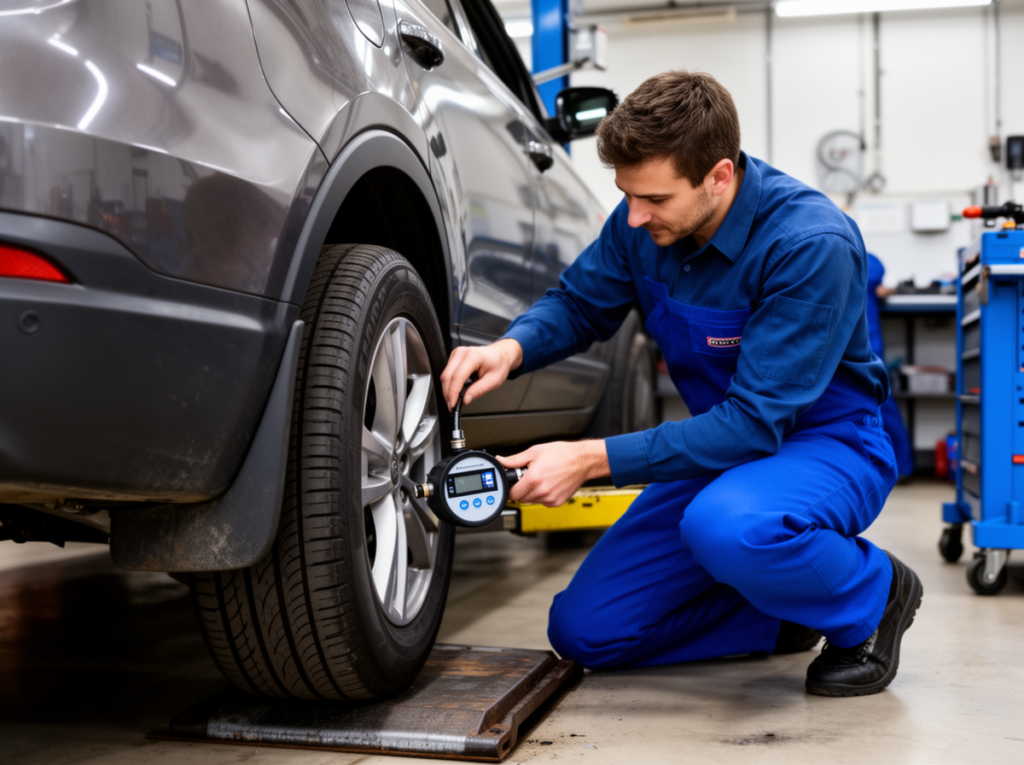
A rhythmic thump that is strongest when a car first begins moving after sitting can come from temporary tire flat spotting, but it can also signal a damaged tire, pressure loss, wheel problem or internal separation. The pattern—how long the vehicle sat, whether the sound changes as the tires warm and whether there is visible damage—helps determine how urgently the tire should be inspected. Deals On Wheels & Tires checks passenger tires and wheels in-shop at 3292 Shawnee Ave #9 in West Palm Beach.
What temporary flat spotting feels like
A tire supports the vehicle on one small contact patch while parked. After several hours or days, especially when pressure is low or the vehicle has been parked in one position for a long time, that area can temporarily feel less round. The driver may notice a light thump or vibration for the first few miles. A temporary condition usually becomes smoother as the tire flexes and reaches normal operating temperature.
When the thump needs prompt inspection
- The thump remains after normal driving instead of fading.
- The steering wheel, seat or floor shakes more as speed increases.
- A tire has a bulge, exposed cord, cut, split, unusual tread rise or out-of-round appearance.
- The TPMS warning is on or one tire repeatedly loses pressure.
- The symptom began after a pothole, curb strike or hard impact.
- There is scraping, grinding, a hot-wheel odor or a change in steering control.
A visible sidewall bubble or bulge is not a temporary flat spot and is not repaired like a tread puncture. Review our sidewall-bulge safety guide and avoid driving on a tire with visible structural damage.
Cold pressure is an important clue
Pressure should be checked cold against the placard inside the driver’s door area, not the maximum pressure molded on the tire. Low pressure can increase tire deflection while parked and may also point to a puncture, valve, bead or wheel leak. If one tire drops again after inflation, the cause needs inspection rather than repeated top-offs. Our overnight pressure-loss guide explains the common leak paths.
A thump is not always the tire tread
A bent wheel, debris trapped near a wheel, uneven tread wear, incorrect bead seating, missing balance weight, damaged belt package, loose component or brake problem can create a repeating sound or vibration. The frequency often changes with road speed because the affected part rotates. A proper check compares all four tires and wheels, measures runout when needed, confirms inflation and fitment, and inspects the wheel end and brakes rather than replacing a tire based only on the sound.
If the initial thump changes into a steering-wheel shake mainly at highway speed, use our highway steering-vibration guide to record the speed range, whether the shake is felt in the wheel, seat or floor, and whether braking, acceleration or a recent tire or wheel service changes it. That pattern can involve tire balance, runout, a bent wheel, tire damage, uneven wear, steering or suspension movement, or another rotating component; it should not be dismissed as temporary flat spotting. Do not increase speed to reproduce a strong vibration, and stop driving if control changes or visible tire damage appears.
What to report to the shop
- How long the vehicle sat before the thump appeared.
- Which corner seems to produce the sound or vibration.
- Whether the symptom fades, stays the same or becomes stronger with speed.
- The cold pressure in each tire and whether a TPMS warning is present.
- Any recent tire installation, rotation, impact or wheel repair.
How tire and wheel inspection separates the causes
The technician should verify size, load specification, direction, inflation, bead seating, tread condition, balance and wheel condition. A recently installed tire may also need its fitment and mounting checked; see our tire-installation checklist. If the thump is accompanied by uneven wear or a steering complaint, steering, suspension and Hunter alignment measurements may be appropriate after the tire and wheel are confirmed safe.
Do not use heat or improvised tire repairs
Do not try to “round out” a tire with excessive speed, overheating, chemicals or an external plug in the sidewall. If the vibration is severe, the tire is visibly damaged, pressure is falling or vehicle control changes, stop in a safe place and arrange inspection instead of continuing to drive.
Passenger tire service in West Palm Beach
Deals On Wheels & Tires provides new passenger tires, tire repair when the damage is safely repairable, mounting and balancing, Hunter alignment, brakes, A/C service, diagnostics, batteries, steering and suspension work, oil service and preventive maintenance. We do not sell used or recap passenger tires. For a repeating tire thump or vibration, call 561-847-4097 and describe how long the vehicle sat, whether the symptom fades and any pressure loss, visible damage or recent impact.