A steering wheel that begins to shake or vibrate as speed increases is a symptom worth diagnosing before it damages tires or becomes a larger handling problem. The cause is not always alignment, and replacing tires without inspection can miss the real issue.
Tire and wheel balance is a common starting point
Small weight differences in a rotating tire-and-wheel assembly become more noticeable as speed rises. That is why an imbalance can feel minor around town and much stronger on I-95 or the Turnpike (State Road 91). A balance check can show whether the assembly needs correction.
Inspect the tire itself
Vibration can also come from irregular tread wear, a damaged tire, a sidewall problem or another tire condition. Pressure should be checked against the vehicle specification, and the tread should be inspected across the full width rather than only at one spot.
If the vibration or rhythmic thump began only after the vehicle sat parked and then eases as the tires warm, temporary flat spotting may be part of the pattern. A thump that stays, worsens, or comes with pressure loss, a bulge, steering shake or visible wheel damage needs inspection rather than more driving. Use our flat-spotting versus tire-damage guide to record when the symptom starts and whether it changes.
If replacement is needed, Deals On Wheels & Tires sells and installs new tires only for passenger cars, SUVs and light-duty pickups. See the new-tire service page.
A wheel problem can feel like a tire problem
A wheel that is bent or damaged may create runout that balancing alone cannot eliminate. The inspection should consider the wheel as well as the tire, especially after a pothole impact or curb strike.
Alignment usually causes different clues
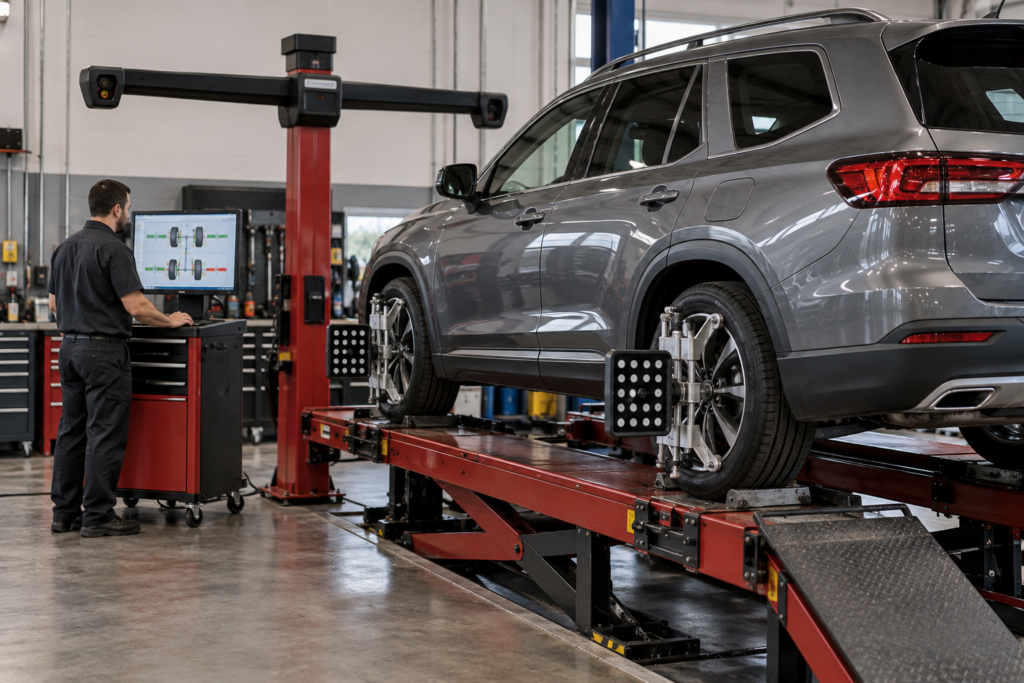
Alignment problems more commonly show up as a pull, an off-center steering wheel or uneven wear, although several problems can occur together. If those symptoms are present, a Hunter wheel alignment measurement can show the vehicle’s actual alignment angles.
Steering and suspension wear should not be overlooked
Loose or worn steering and suspension components can change how the wheel moves and can contribute to vibration or unstable handling. A diagnosis should inspect the related components instead of treating vibration as an automatic tire-balancing job.
Does it happen only while braking?
If the vibration becomes strongest when the brake pedal is applied, the diagnostic path changes. Brake components should be inspected rather than assuming the tire/wheel assembly is responsible. See the brake repair page for the separate service.
Record exactly when the vibration happens
Before bringing the vehicle in, note the speed range where the vibration starts, whether it is felt mainly in the steering wheel or seat, whether braking changes it and whether the vehicle recently hit a pothole. Those details help separate tire, wheel, brake and suspension clues more efficiently.
Schedule an in-shop vibration diagnosis
Call (561) 847-4097 with the full tire size from the sidewall, vehicle year, make and model, the speed range where the vibration begins, where you feel it and whether braking changes it. Deals On Wheels can inspect the new-tire and wheel assembly, measure Hunter alignment when indicated and check related steering, suspension and brake clues.