A steering wheel that feels loose, needs frequent correction, or lets the car drift within the lane deserves more than a quick alignment guess. Tire condition, wheel alignment, worn steering joints, suspension movement, and even a wheel bearing can produce similar complaints. The safest repair plan starts with a complete inspection before parts or adjustments are approved.
What drivers usually mean by “loose steering”
Useful details include how far the steering wheel moves before the tires respond, whether the car wanders on a straight road, and whether the symptom changes during braking, acceleration, bumps, or crosswinds. A vehicle that only pulls on crowned roads may have a different problem than one that suddenly changes direction over small bumps.
If the steering suddenly develops excessive free play, the vehicle will not hold a lane, a wheel looks out of position, or you hear a heavy clunk after a curb or pothole impact, reduce speed and avoid highway driving. Arrange an inspection rather than continuing to test the symptom in traffic.
If the complaint is a sudden kick or jerk through the steering wheel when one front tire crosses a bump—rather than a gradual drift on a smooth road—use our steering-wheel kickback over bumps guide and note which side reacts, the road speed, braking or acceleration, recent pothole contact, and any clunk or vibration. That pattern can shift the inspection toward a damaged tire or wheel, tie rod, ball joint, control-arm bushing, strut, mount, bearing, or steering-assist concern. An alignment by itself cannot correct a loose or damaged part.
Start with the tires and wheels
Uneven tire pressure, separated tread, irregular wear, mismatched tires, or a damaged wheel can make a car feel vague or unstable. Check pressures when the tires are cold and use the vehicle manufacturer’s door-jamb specification, not the maximum pressure molded into the tire sidewall. Look for bulges, exposed cords, cuts, and a tire that appears lower than the others.
A vibration that increases with road speed points more toward tire or wheel balance than ordinary steering free play, although more than one fault can exist. Our guide to highway steering-wheel vibration explains that distinction.
Alignment can be involved, but it is not the only cause
Incorrect toe or caster can affect straight-line stability and steering return. However, an alignment should follow an inspection for looseness. Adjusting alignment angles cannot repair a worn tie-rod end, ball joint, control-arm bushing, steering rack mount, or wheel bearing. If a joint moves under load, the readings may not remain stable.
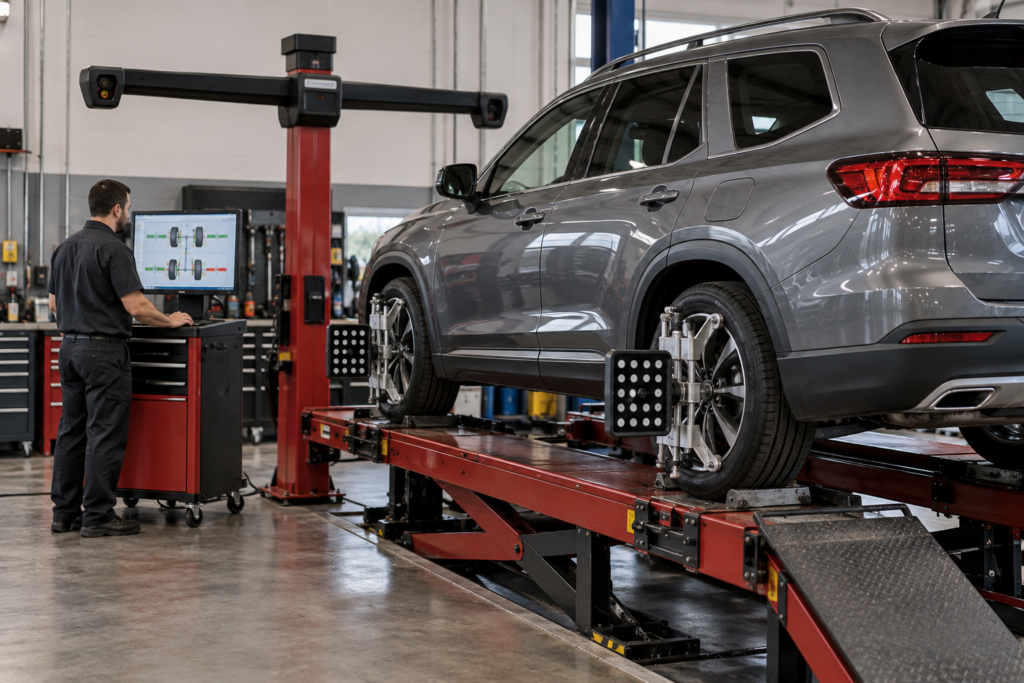
Review the signs a car may need wheel alignment and what to do after a curb or pothole impact. A Hunter alignment measurement is most useful after the steering, suspension, tires, and wheels are confirmed serviceable.
Steering and suspension parts that need inspection
- Inner and outer tie rods: wear can create delayed response, toe change, or a knock during direction changes.
- Ball joints and control-arm bushings: excess movement can let the wheel shift as loads change.
- Steering rack, gear, mounts, and shaft joints: looseness can add free play between the steering wheel and road wheels.
- Wheel bearings: wear can allow movement at the hub and may also produce a hum or growl.
- Shocks and struts: weak damping does not usually create steering free play, but it can make the car float, bounce, or feel unsettled over uneven pavement.
Related symptoms are covered in our guides to a steering wheel that does not return to center and when shocks and struts need inspection.
What a shop diagnosis should include
A technician should confirm the complaint on a controlled road test when safe, inspect tire pressure and condition, check wheel and hub movement, and examine steering and suspension joints using the correct unloaded or loaded procedure for that vehicle. A scan for steering-assist or stability-control faults may also be appropriate on vehicles with electric power steering.
Only after mechanical looseness and tire defects are ruled out should alignment readings be used to decide whether adjustment is needed. This sequence avoids paying for an alignment that cannot hold because a worn component still moves.
Schedule steering and suspension diagnosis in West Palm Beach
Deals On Wheels & Tires provides steering and suspension diagnosis, Hunter wheel alignment, new passenger tires, brakes, A/C service, batteries, oil service, and preventive maintenance at 3292 Shawnee Ave #9, West Palm Beach, FL 33409. See our auto repair services or call 561-847-4097 to describe the symptom and arrange an inspection.