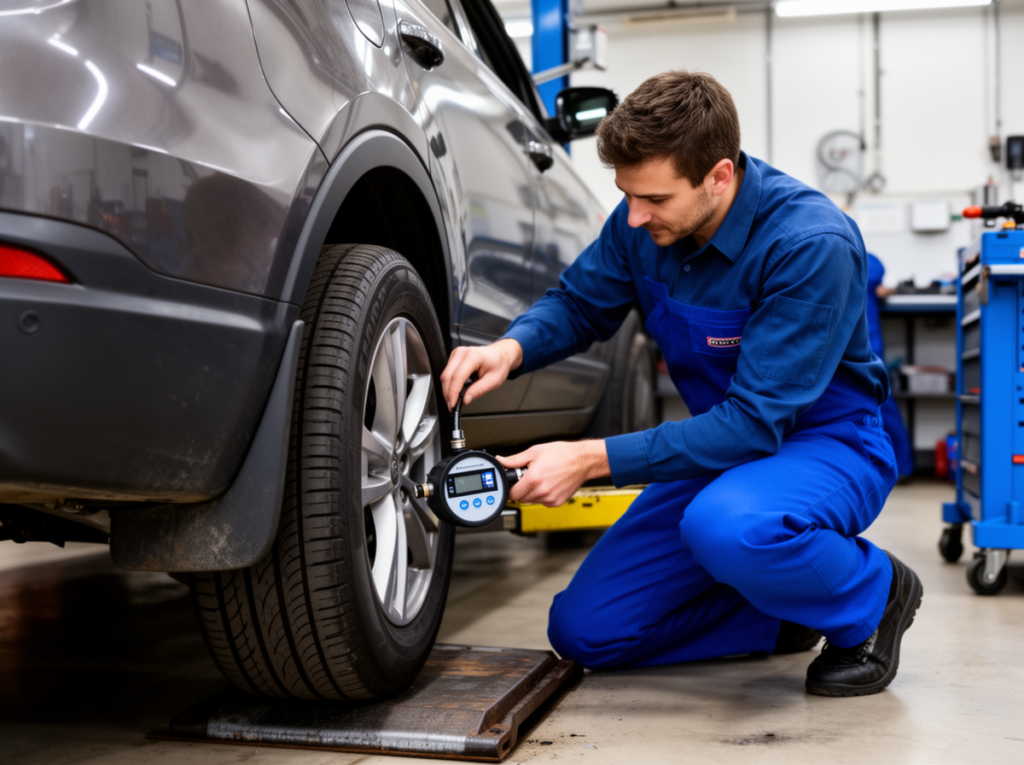
A vehicle can feel different after new tires are installed, but a harsh ride, loud new noise, steering shake, pull, or rubbing sound should not be dismissed automatically. Tread design, tire construction, pressure, fitment, balance, wheel condition, alignment, and suspension condition all affect what the driver feels. The right response depends on whether the change is a mild characteristic or a sign that something needs correction.
Some changes can come from the new tire design
New tires have full tread depth and may use a different tread pattern, sidewall construction, or load rating from the tires they replaced. An all-terrain pattern can sound different from a highway tire, and a tire with a stiffer construction can change steering response or ride feel. Those differences should still be compared with the tire’s intended application and the vehicle manufacturer’s requirements.
A mild change in sound is different from a repeating thump, growl, scrape, steering-wheel shake, or vibration that increases with speed. A strong pull, rapid pressure loss, visible wobble, bulge, rubbing, or severe vibration is not a normal break-in condition. Reduce speed and return for inspection rather than continuing highway driving.
Check pressure before blaming the tire
Overinflation can make impacts feel sharper and reduce the tire’s ability to absorb small road irregularities. Underinflation can make handling feel slow, increase heat, and damage the tire. Pressure should be checked cold and set to the vehicle manufacturer’s door-jamb specification for the application, not simply to the maximum number molded into the sidewall.
If one tire repeatedly loses pressure, the cause may be a puncture, valve, wheel sealing surface, or mounting issue. Repeatedly adding air is not a diagnosis.
Balance, wheel runout, and mounting matter
A vibration that appears at a particular speed range can come from imbalance, a bent wheel, tire or wheel runout, debris between the wheel and hub, or an assembly that needs to be rechecked. A tire also needs to be seated evenly on the rim. The technician should inspect the bead-seating reference line, wheel condition, balance readings, and mounting surfaces rather than assuming every vibration is an alignment problem.
Our guide to highway vibration after tire installation explains how speed-related shake differs from an ordinary pull or off-center steering wheel.
Confirm fitment, load capacity, and tire orientation
The complete tire size, load index, speed rating, and vehicle application should be confirmed. Directional tires must rotate in the marked direction, and asymmetric tires must be installed with the correct side facing outward. A tire that is too large, too wide, or incorrect for the wheel can rub during turns, suspension travel, or braking.
For SUVs and light-duty work pickups, review the fitment and load checklist for new tires. Fitment should be selected for the actual vehicle and use, not appearance alone.
Alignment and suspension can change how new tires feel
New tires do not repair worn suspension parts or incorrect alignment. Worn shocks, struts, bushings, ball joints, tie rods, or wheel bearings can allow the tire to move or bounce. Incorrect toe or camber can make the vehicle pull and can begin damaging new tread. Inspect mechanical looseness before relying on alignment adjustment alone.
See the guides to signs the vehicle may need alignment and cupped or scalloped tire wear. Existing wear on the old tires may have hidden a suspension or alignment problem that becomes easier to notice with new tread.
What a post-installation inspection should include
- Cold tire pressure and any active TPMS warning.
- Correct size, load index, orientation, wheel fitment, and rubbing clearance.
- Bead seating, visible tire condition, wheel damage, and hub mounting surfaces.
- Balance and runout when the complaint is speed-related.
- Steering, suspension, wheel-bearing, and alignment condition when the vehicle pulls, wanders, or bounces.
Choose the service that matches the symptom
Mounting attaches the tire to the wheel, balancing corrects weight variation in the rotating assembly, and alignment measures and adjusts wheel angles. A speed-specific shake usually sends the inspection toward balance, runout, wheel, and mounting checks; a steady pull or off-center steering wheel points toward pressure, tire force, brake, steering, suspension, and alignment checks. Use our mounting, balancing, and alignment comparison to understand which measurement answers which complaint before approving service.
New passenger tires and diagnosis in West Palm Beach
Deals On Wheels & Tires sells and installs new passenger tires and provides balancing, Hunter wheel alignment, steering and suspension diagnosis, brakes, A/C service, batteries, oil service, and preventive maintenance at 3292 Shawnee Ave #9, West Palm Beach, FL 33409. Review our auto repair services or call 561-847-4097 to describe the speed, sound, road condition, and steering behavior that reproduce the problem.