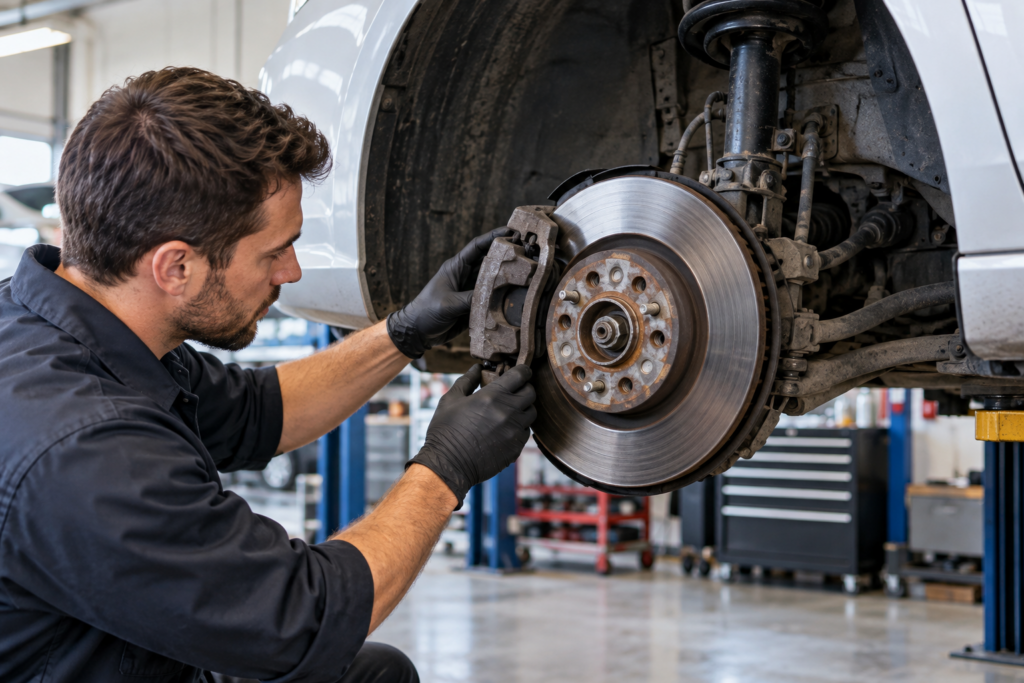
A vibration that appears while braking often sends drivers straight to one conclusion: warped rotors. Rotor condition can absolutely contribute to brake pulsation, but it is not the only possible cause. Tires, wheel fitment, suspension looseness, hub condition and other rotating components can create vibrations that are felt through the pedal, steering wheel or vehicle body.
When the vibration happens is an important clue
If the vehicle is smooth at a steady speed and the vibration appears mainly when the brakes are applied, the brake system deserves close inspection. If the vibration is present even when you are not braking, tire balance, wheel condition, wheel bearings, suspension or driveline issues may also be involved.
A different pattern is a brief buzz, kickback or chatter only during the last few feet of a slow stop. That may involve wheel-speed input or low-speed ABS activity rather than ordinary rotor-related pulsation. Use the low-speed brake-pedal chatter guide to report whether the sensation occurs on dry pavement, after a bump or turn, at one repeatable speed, and with an ABS or brake warning. The symptom does not by itself prove a failed ABS hydraulic unit, wheel-speed sensor or rotor. If braking becomes unpredictable, stopping distance increases, a red brake warning remains on, or the pedal becomes low or sinks, keep the vehicle parked and arrange diagnosis rather than test-driving it.
Brake-related causes of pulsation
- Rotor thickness variation or uneven rotor surface condition.
- Heat-related rotor or pad issues.
- Improper wheel or rotor seating.
- Caliper or slide problems that create uneven braking.
- Brake-pad wear patterns that point to a mechanical issue.
The right diagnosis is more useful than replacing rotors by assumption. A brake inspection can compare pad wear, rotor condition, caliper operation and the mechanical condition of the surrounding components.
Why tires and alignment still matter
A tire with a separated belt, irregular wear or impact damage can produce a vibration that becomes more noticeable when braking loads shift forward. Worn steering or suspension parts can also amplify movement. If tire wear is uneven or the vehicle pulls, inspect those systems before assuming every vibration begins at the brake rotor.
Deals On Wheels provides brake repair in West Palm Beach as well as Hunter wheel alignment service. That combination is useful when braking symptoms and tire wear appear together.
Other warning signs that deserve prompt inspection
- Grinding or metal-on-metal noise.
- A brake warning light.
- The vehicle pulling sharply during braking.
- A soft, sinking or unusually hard brake pedal.
- One wheel becoming much hotter than the others.
- Visible brake-fluid leakage.
Brakes are a safety system, so a major change in braking feel should be inspected promptly rather than driven until the symptom becomes severe. If the vibration is accompanied by reduced braking performance, unusual pedal travel or grinding, minimize driving and have the vehicle checked.
Start with diagnosis, not a parts list
A brake pulsation complaint should be approached as a system problem. Inspect the brakes, then check the tire, wheel, hub and suspension factors that can imitate or contribute to the symptom. That prevents unnecessary parts replacement and helps protect the life of the repairs that are actually needed.
For broader mechanical concerns, see our West Palm Beach auto repair services. For tire replacement related to damage or wear, visit our new tire service page; passenger cars, SUVs and light-duty pickups are new-tire-only at Deals On Wheels.
If the vehicle also drifts or pulls during braking, read what can cause a car to pull to one side when braking before scheduling an inspection.
To schedule an in-shop brake inspection for pedal vibration, grinding, pulling or a change in pedal feel, call (561) 847-4097 with the vehicle year, make and model, when the symptom occurs and whether any warning light is on.