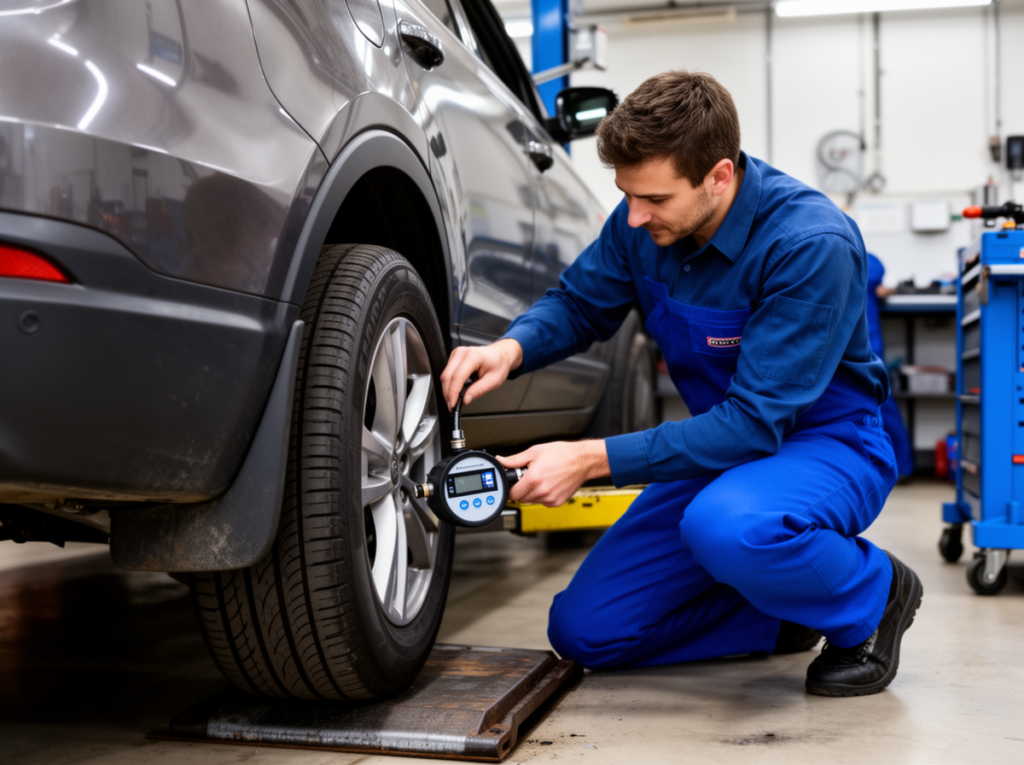
A tire-pressure warning light that appears after new tires are installed does not automatically mean the new tires are defective. The Tire Pressure Monitoring System (TPMS) is watching pressure information from the vehicle’s sensors, and several different conditions can trigger a warning.
Start with actual tire pressure
The first check is the inflation pressure in all applicable tires. Pressure changes with temperature, and a slow leak at the tread, valve stem, bead area or wheel can also cause a warning. The correct pressure is based on the vehicle manufacturer’s specification, not the maximum pressure molded into the tire sidewall.
Compare pressure when the tires are cold and use the vehicle placard rather than the maximum number molded into the tire sidewall. Pressure normally rises after driving, so do not bleed a hot tire down to the cold placard value. Our hot-versus-cold tire-pressure guide explains the normal pattern and the uneven changes that deserve inspection.
Steady TPMS light versus flashing light
On many vehicles, a steady warning commonly points to a pressure issue, while a warning that flashes for a period and then stays on can indicate that the system is not communicating properly with one or more sensors. Exact behavior varies by vehicle, so the light pattern is a useful clue rather than a universal diagnosis.
A sensor may be weak or damaged
TPMS sensors contain batteries and electronic components. A sensor can fail because of age, internal battery depletion, physical damage, corrosion or service-related issues. A tire installation can also reveal a sensor that was already near the end of its service life.
The vehicle may need a relearn
Some vehicles automatically recognize sensor positions after driving. Others require a specific relearn or registration process after tire rotation, wheel changes or sensor replacement. The correct process depends on the vehicle.
If the warning flashes for a period and then stays on, that pattern can indicate a monitoring-system fault even when one or more tires also need pressure correction. Use our blink-then-steady TPMS guide to record cold pressures, the flash duration, recent tire or wheel service, and whether the vehicle uses direct sensors or an indirect relearn.
What if the light comes on days later?
A warning that appears later can indicate a genuine loss of pressure rather than an installation issue. Check the tire promptly instead of repeatedly adding air without finding the source. If there is a puncture, the location and condition of the tire determine whether a repair may be appropriate. See our tire repair service for more information.
If a low-pressure reading returns after inflation, the next step is to locate the leak rather than assume the sensor caused it. Our punctured-tire repair guide explains why tread location, injury size and an internal inspection determine whether repair is appropriate; sidewall or shoulder damage requires replacement.
New passenger tires at Deals On Wheels
Deals On Wheels & Tires sells and installs new tires only for passenger cars, SUVs and light-duty pickups. When purchasing four new passenger tires, mounting, balancing and disposal are included, along with lifetime rotation on the set of four. Current availability depends on the exact tire size and application.
If the vehicle also pulls, the steering wheel is off-center, or the previous tires had uneven wear, ask about a wheel alignment inspection. TPMS and alignment solve different problems, but both can matter when protecting a new set of tires.
Information to have when you call
- Year, make and model.
- Complete tire size from the sidewall.
- Whether the TPMS light is steady or flashes first.
- Whether the warning started immediately after service or later.
- Whether a specific tire is visibly low.
- Whether wheels, sensors or tires were recently changed or rotated.
Deals On Wheels & Tires
3292 Shawnee Ave #9, West Palm Beach, FL 33409
Call (561) 847-4097 for current new-tire and tire-service availability.