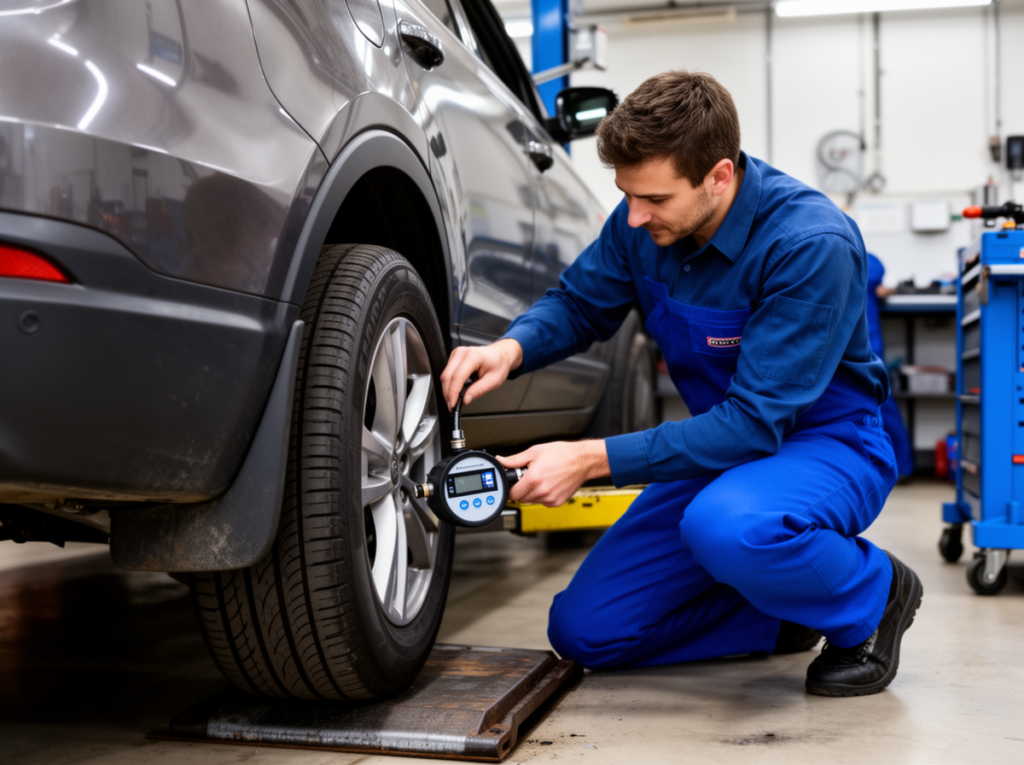
A low tire is a symptom to investigate
If one tire repeatedly looks low after the vehicle has been parked, adding air may hide the symptom without resolving its cause. A puncture, valve leak, bead leak or damaged wheel can each require a different repair. Tell the shop whether only one tire loses pressure, how often you add air and whether the warning returns after driving or overnight. Avoid driving on a visibly flat or damaged tire.
Before adjusting pressure, compare a cold reading with the vehicle placard. Pressure normally rises as a tire warms during driving, so do not bleed a hot tire to force it down to the cold specification. Our after-driving tire-pressure guide explains the hot-versus-cold comparison and when an uneven pattern needs inspection.
Slow leak or tire pressure dropping overnight in West Palm Beach? For an in-shop tire inspection, puncture evaluation or new passenger tire quote, call Deals On Wheels & Tires at 561-847-4097. Visit 3292 Shawnee Ave #9, West Palm Beach, FL 33409; call ahead to confirm current service and new-tire availability. Passenger cars, SUVs and light-duty pickups are serviced at the shop.
Bring the right information
Share the vehicle year, make and model, the full tire size and the affected wheel position. Mention recent tire installation, a curb or pothole impact, TPMS work or a returning pressure warning, or a previous puncture repair. A pressure warning alone does not identify the leaking component. Keep any recent tire invoice so the technician can compare the work history with the current symptoms.
Inspection before a repair decision
A technician can inspect the tire, valve components, sealing surfaces and wheel condition. Whether a puncture can be repaired depends on its location, damage, previous repairs and applicable tire repair requirements. Sidewall damage or evidence that a tire was driven while severely underinflated can change the recommendation. Ask the shop to explain the finding and quote the proposed work before authorizing it.
If the pressure loss is accompanied by a visible bubble, bulge, split or distorted sidewall, do not treat it as a routine slow leak. Review our tire sidewall bulge and bubble guide, keep the vehicle parked, and do not drive on the damaged tire. A sidewall bulge is not a tread puncture that should be plugged or patched.
When the tread looks clear but one tire keeps dropping
Cooler overnight temperatures can lower pressure in every tire, but repeated loss at one wheel—especially when the other tires stay comparatively stable—points to a leak or sealing problem that needs inspection. The source may be too small to see in the tread. A valve core or stem, bead seal, wheel corrosion or damage, prior repair, puncture channel, or damage from running underinflated can all be involved. Use our tire-losing-air-with-no-visible-nail guide to organize the clues before the shop checks the complete tire-and-wheel assembly.
Record the cold pressure at the same time on consecutive mornings and note whether the warning returns after inflation. Do not exceed the vehicle placard pressure, use a plug as a diagnosis, or keep driving on a tire that is visibly low, damaged, bulged, or losing pressure rapidly.
Replacement and follow-up
If replacement is needed, the tire must fit the vehicle and match the required size, load and application. Deals On Wheels sells new passenger tires. After service, ask what pressure setting and TPMS procedure apply to your vehicle and whether related tire wear needs further inspection. A new tire alone will not correct a damaged wheel or unresolved valve problem.
Visit the West Palm Beach shop
Deals On Wheels & Tires provides in-shop tire inspection and service at 3292 Shawnee Avenue, Suite 9, West Palm Beach. Call 561-847-4097 to discuss the symptoms and appointment availability. Review our tire repair service, new passenger tire options, and Hunter wheel-alignment service before your visit.