Installing new tires can improve traction and replace worn rubber, but it does not automatically correct every steering or handling problem. If a car still pulls left or right after new tires are installed, the next step is to separate tire-related causes from alignment, steering and suspension issues.
Check tire pressure first
A pressure difference from side to side can change how a vehicle tracks. Pressure should be checked against the vehicle manufacturer’s specification rather than a generic number taken from the tire sidewall.
New tires do not reset alignment angles
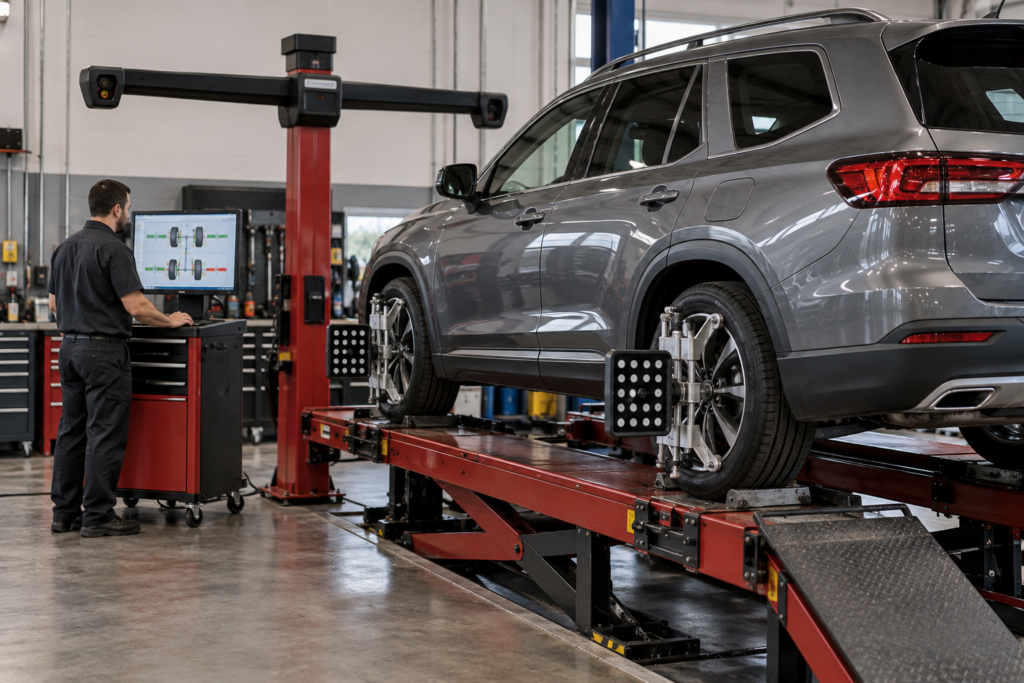
If toe, camber or caster is outside specification, replacing worn tires does not correct those angles. The result can be a steering pull, an off-center steering wheel or fresh uneven wear on the new tires. A Hunter wheel alignment measurement can show whether the alignment itself needs correction.
Steering and suspension wear can imitate a tire problem
Loose or worn steering and suspension components may affect stability and tire wear. That is why a pull should not be diagnosed by replacing parts at random. The vehicle needs to be inspected as a system. Deals On Wheels provides in-shop auto repair for passenger vehicles in West Palm Beach.
Road crown and braking behavior matter too
Some roads naturally slope for drainage, which can create a slight directional tendency. A vehicle that pulls only while braking points toward a different diagnostic path than one that pulls constantly. Brake condition should be evaluated separately when the symptom changes with pedal application; see the brake service page.
Protect the new tires by finding the cause early
The best time to correct a pull is before it creates a new wear pattern. Deals On Wheels services passenger cars, SUVs and light-duty pickups with new tires only. Drivers who are replacing tires can start with the new tire shop page and add alignment or mechanical inspection based on the vehicle’s actual symptoms.
Book a pull and tire-wear inspection
Call 561-847-4097 with the full tire size from the sidewall, vehicle details, when the pull began, which direction it moves, tire pressures, and whether the symptom changes during braking or acceleration. The shop can inspect Hunter wheel alignment, steering and suspension, brakes, wheels and tire condition rather than assuming new tires alone caused the pull. Deals On Wheels & Tires sells new passenger tires only; no used or recap passenger tires.