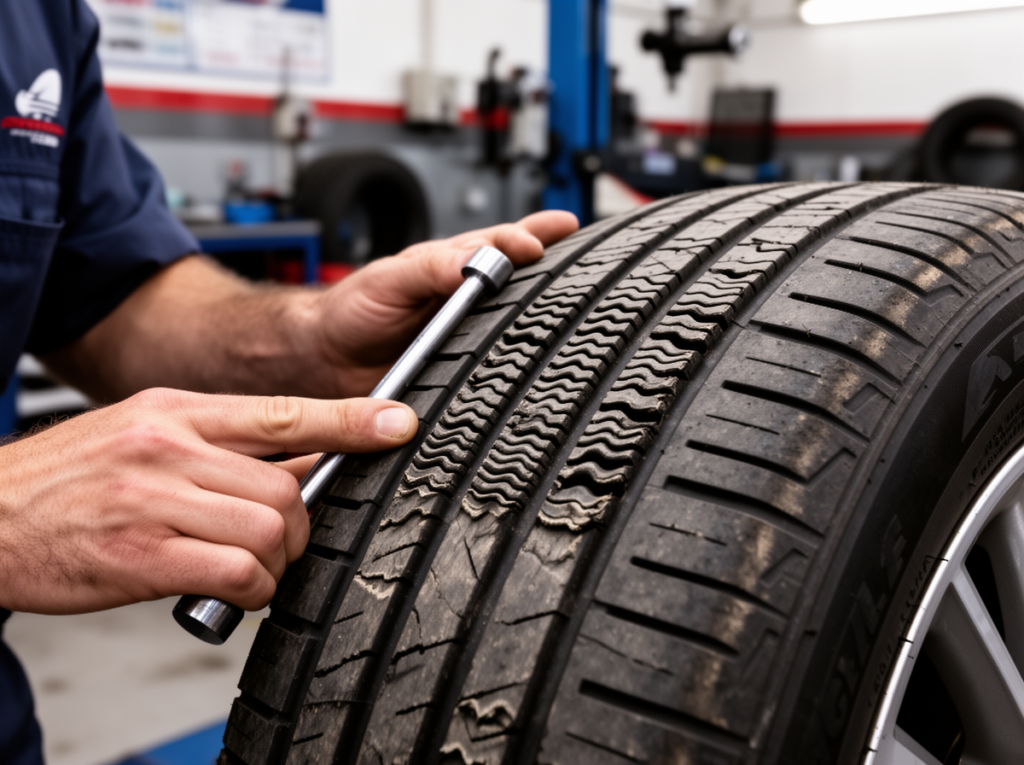
If the inside shoulder of a tire is worn much faster than the center or outside edge, replacing the tire without correcting the cause can shorten the life of the next set. The pattern often points to alignment geometry or worn steering and suspension parts, but tire pressure, driving conditions and previous repairs can also contribute.
Why the inner shoulder wears first
Wheel alignment controls angles such as camber and toe. When those angles are outside specification, the tread can scrub against the road instead of rolling evenly. Excessive negative camber can load the inner shoulder, while incorrect toe can create rapid feathering or edge wear across the tread.
If the worn area rises and falls around the tire in alternating high and low spots, that is a different pattern from a continuous inner-edge strip. Compare it with our tire cupping and scalloped-wear guide; cupping can involve shocks, struts, balance, tire condition or alignment, while steady inner-shoulder wear keeps alignment geometry and component looseness higher on the inspection list.
Alignment is only part of the inspection
Alignment settings cannot stay correct if steering or suspension components have excessive movement. Tie rods, ball joints, control-arm bushings, wheel bearings, struts and other components should be checked when wear is severe or returns quickly after an alignment.
If inside-edge wear appears with the vehicle visibly lower on one side, a wheel that looks tilted, unequal body-to-tire clearance, or one corner that settles after parking, use our car sits lower on one side guide and report whether the height changes with cargo removed, tire pressures corrected, or the vehicle restarted. Measure the ride-height concern before approving alignment or a replacement tire: alignment cannot correct a weak or broken spring, damaged mount, air-suspension leak, bent component, or tire-size mismatch. Do not crawl under a vehicle supported only by a jack.
Clues that point toward a mechanical issue
- Steering wheel no longer centered on a straight road.
- Vehicle drifts or pulls to one side.
- Clunking over bumps or when changing direction.
- Tires show different wear patterns left to right.
- Alignment will not hold after correction.
- Recent curb, pothole or collision impact.
Before replacing the worn tire, compare the wear pattern and ride symptoms with our shocks and struts inspection guide and have looseness checked. If an alignment is measured, our alignment-report guide explains why the readings should be considered with component condition rather than treated as an automatic parts list.
Do not use a new tire to hide an old problem
A new tire can make the vehicle feel better temporarily, but it will not correct worn components or incorrect alignment. When the old tire shows abnormal wear, the useful information is in the wear pattern itself. Inspect it before disposal and compare the condition of all four tires.
For installation basics, see Tire Installation in West Palm Beach.
New tires and Hunter alignment in one visit
Deals On Wheels & Tires sells and installs new tires for passenger cars, SUVs and light-duty pickups and can inspect steering and suspension while checking alignment with a Hunter Hawkeye Elite system. Our passenger-tire policy is new tires only. Bring the full tire size from the sidewall when requesting a tire quote.
Shop location
Visit Deals On Wheels & Tires at 3292 Shawnee Ave #9, West Palm Beach, FL 33409 for Hunter wheel alignment, steering and suspension inspection, and new passenger tires. Call 561-847-4097. Hours: Monday-Friday 8:30 AM-5:30 PM, Saturday 8:30 AM-2:00 PM, Sunday closed.