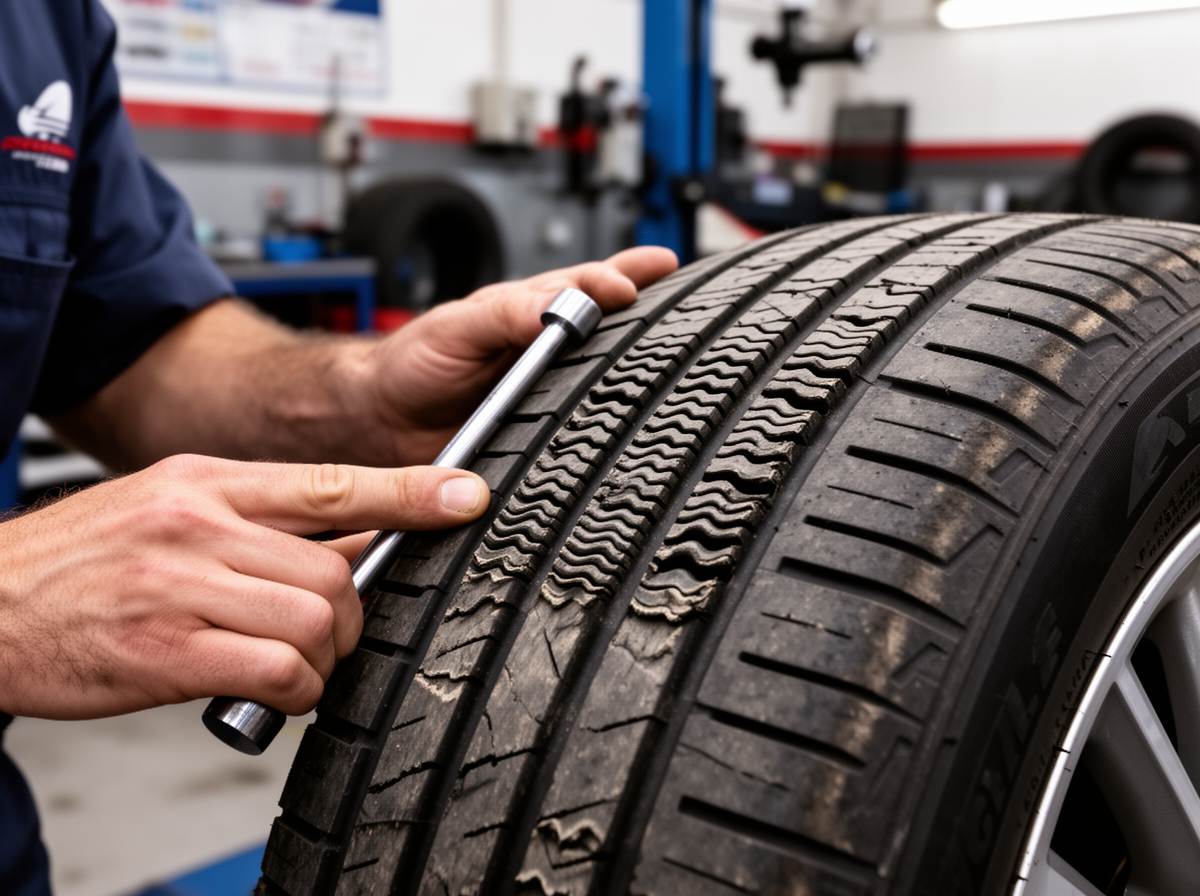
A tire rotation should follow the vehicle and tire requirements. Directional tires and vehicles with different front and rear tire sizes need a different approach from a vehicle with four matching, non-directional tires. Deals On Wheels & Tires checks the fitment before recommending a rotation pattern.
Start with the vehicle’s requirements
Bring the year, make and model and tell us whether the wheels or tires have been changed from the original setup. The vehicle manual and tire manufacturer’s guidance determine the appropriate rotation interval and pattern. A generic mileage reminder does not replace those requirements.
Directional tires have a rolling direction
A directional tire has a sidewall marking showing its intended rolling direction. Moving a mounted assembly from one side to the other can reverse that direction. Where the vehicle permits, a front-to-rear move on the same side may be appropriate. The shop should check the markings, sizes and wheel fitment before moving anything.
Different front and rear sizes limit the pattern
Some vehicles use a staggered setup, with different sizes on the front and rear. Moving those tires between axles may be inappropriate. Wheel width, offset and other fitment requirements also matter. Depending on the tires and vehicle, a conventional four-position rotation may not be possible.
All-wheel-drive vehicles add another fitment question: even when the tire size printed on every sidewall matches, tread depth, construction and rolling circumference can affect the replacement decision. If one tire is damaged or worn much more than the others, review our AWD tire replacement guide before authorizing a single-tire replacement. The vehicle manufacturer’s requirements, remaining tread measurements and the exact tire application determine whether one, two or four tires are appropriate; rotation cannot correct a mismatched rolling circumference.
Inspect wear before simply moving tires
Rotation can distribute normal wear; it does not repair a damaged tire or correct worn suspension. Ask us to inspect pressure, tread wear and the tire’s condition. Scalloped wear, an inside-edge wear pattern, vibration or pulling deserves diagnosis. A badly worn or damaged tire should not simply be moved to another position and treated as fixed.
If wear is concentrated through the center of the tread or across both shoulders, use our center-versus-both-shoulders tire-wear guide before deciding that rotation is the answer. Record cold pressure against the vehicle placard and measure the inner, center and outer tread at each position. Rotation can redistribute normal wear, but it cannot reverse wear already present or repair a pressure, leak, load, alignment or suspension cause.
Rotation, balancing and alignment do different jobs
A rotation changes tire positions. Balancing addresses imbalance in a tire and wheel assembly. Alignment checks and adjusts supported wheel angles. Read our mounting, balancing and alignment guide and tire cupping guide if your tires wear unevenly.
Ask about your tire setup
Call 561-847-4097 with the full tire size from the sidewall and vehicle details. Deals On Wheels & Tires offers new passenger tires, tire service and Hunter Hawkeye Elite alignment at 3292 Shawnee Ave #9, West Palm Beach, FL 33409. Buying four new tires includes lifetime rotation; the vehicle’s fitment determines which rotation is appropriate. Hours: Monday–Friday 8:30 AM–5:30 PM; Saturday 8:30 AM–2:00 PM; Sunday closed.