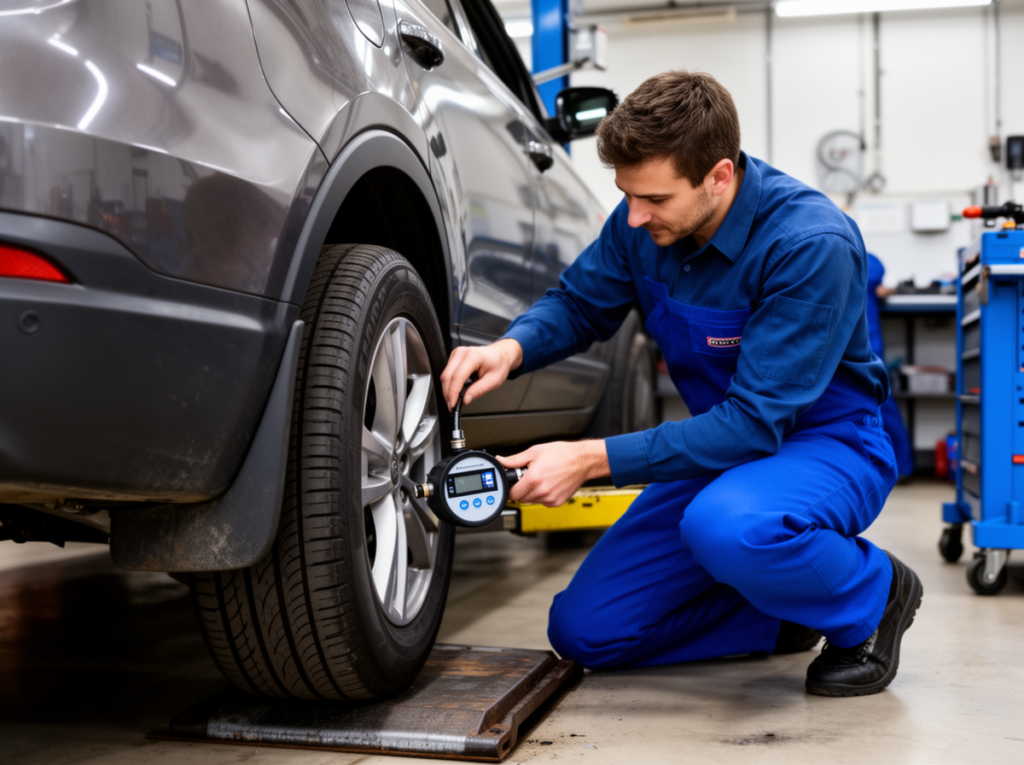
A nail in a tire does not automatically mean the tire is repairable, and it does not automatically mean the tire must be replaced. The answer depends on where the damage is located, how large it is, whether the tire was driven while severely underinflated and what the inside of the tire looks like after inspection.
Before coming to the shop, note whether the tire holds pressure, how quickly it loses air and whether the visible damage is in the center tread, shoulder or sidewall. Bring the full tire size from the sidewall when requesting a repair inspection or replacement quote. Do not rely on a visual check alone or keep driving on a severely underinflated tire.
Tread-area punctures are different from sidewall damage
A small puncture in the repairable tread area may be a candidate for professional repair when the surrounding tire is otherwise in good condition. Damage near the shoulder or in the sidewall is different because those areas flex heavily as the tire rolls. A sidewall cut, bubble, bulge or structural injury should not be treated like a simple tread puncture.
If you see a bubble or bulge, read our guide on tire sidewall bubbles and bulges. For in-shop inspection, visit our tire repair service page.
Driving on a low tire can create hidden damage
A puncture may start small, but continued driving at very low pressure can over-flex the sidewall and generate heat. That can damage the tire internally even when the original nail hole looks minor from the outside. This is one reason a proper repair decision requires more than plugging the visible hole from the tread surface.
Repeated air loss needs diagnosis
Not every slow leak comes from a tread puncture. Air can also escape from the valve, the bead area, corrosion or damage at the wheel, or a previous repair. If you keep adding air to the same tire, the better approach is to find the actual leak and inspect the tire before the problem becomes a roadside failure.
If the pressure loss began after a pothole or curb impact, the cause may not be a nail at all. The bead seal, wheel, valve or sidewall can be affected even when the tread shows no obvious puncture. Use our pothole tire air-loss guide to record the impact, tire position, pressure-loss pattern, pulling or vibration before inspection. Do not keep driving on a visibly low, bulged or sharply pulling tire.
When replacement makes more sense
Replacement is generally the safer path when damage is outside a repairable area, when the tire has structural sidewall damage, when it has been run flat long enough to damage the casing, or when the remaining condition of the tire makes repair inappropriate. The exact decision should be based on inspection rather than guesswork.
For passenger cars, SUVs and light-duty pickups, Deals On Wheels & Tires sells new tires only. We do not advertise used or recap passenger tires. If replacement is needed, our new tire shop page explains the in-shop options.
Check the reason the tire was damaged
A puncture may be random road debris, but abnormal tread wear can also make a tire more vulnerable or shorten its useful life. If the tread is wearing unevenly, the steering wheel is off-center or the vehicle pulls, consider a wheel alignment check. If looseness, noise or visible suspension damage is present, a steering and suspension inspection may be appropriate.
Tire repair in West Palm Beach
Deals On Wheels & Tires is located at 3292 Shawnee Ave #9 in West Palm Beach. Bring the vehicle in for a tire inspection rather than relying only on the visible puncture. We can help determine whether the tire is a reasonable repair candidate or whether replacement with a new tire is the correct next step. Call 561-847-4097 for current tire-repair and new-tire availability.